
Block 05 of 11 · Report SSRC-TER-LG-01 · Version 2.2
Self-protection, myths and recommendations
Before, during and after; critical analysis of the triangle of life; recommendations and public communication.
14. Self-protection before, during, and after
| CENTRAL IDEA. Simple behaviour works when practised. The objective during the shaking is not to evacuate: it is to avoid falling and to protect the head and neck from objects and fragments. |
|---|
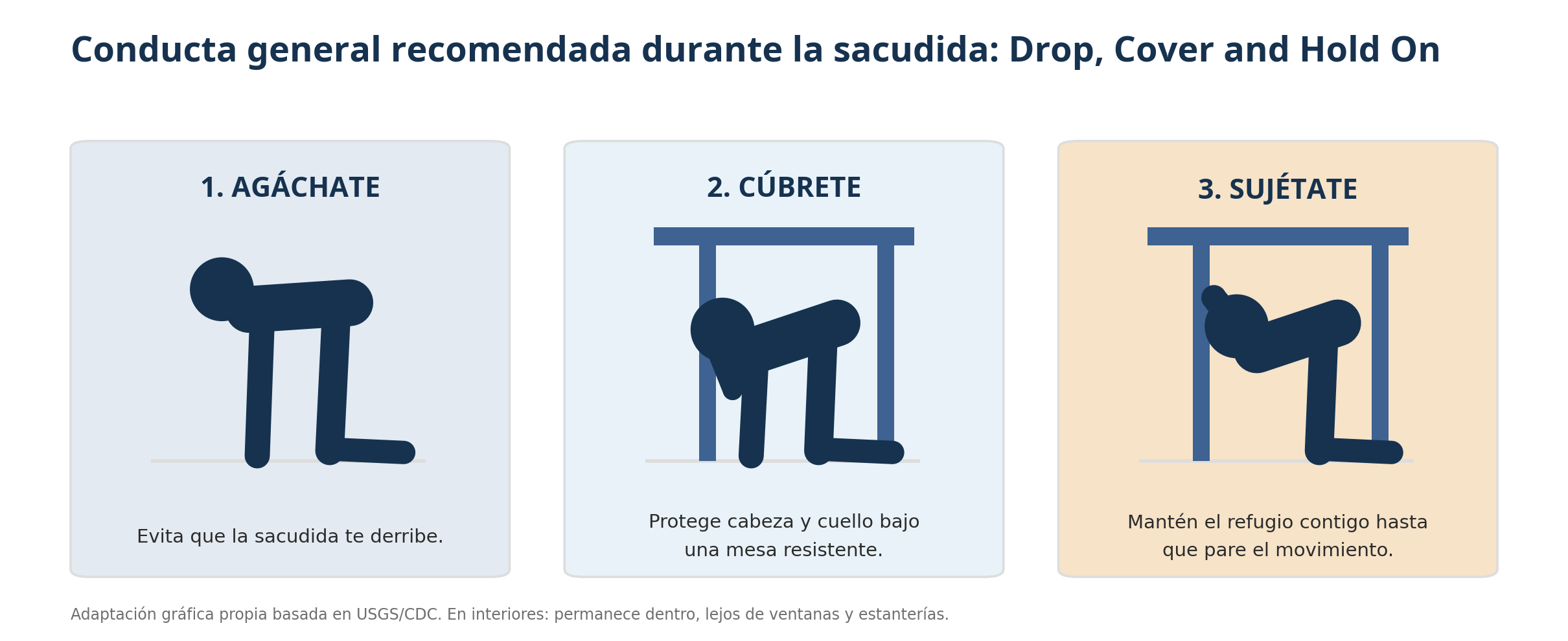
Figure 12. Recommended general behaviour indoors. Own graphic adaptation based on CDC and USGS [19-20].
Before
Secure shelves, televisions, water heaters, lamps, gas cylinders, and heavy objects; place heavy loads at the bottom.
Identify sturdy tables, interior walls, and areas away from glass; practise drop, cover, and hold on.
Know the location of gas, water, and electricity shut-off valves; do not routinely turn off gas if there are no signs of a leak and do not turn it back on without a technician.
Prepare water, food, medication, radio, flashlight, battery, footwear, gloves, whistle, and copies of documents.
Define contacts and meeting point; include children, elderly, people with disabilities, pets, and visitors.
Know tsunami routes and dangerous slopes; do not rely on a single road or lift.
During
Indoors, stay inside, drop to your hands and knees, cover your head and neck under a sturdy table and hold on to it. If there is no table, get down next to an interior wall or low furniture that cannot fall and protect your head and neck. Stay away from windows, facades, shelves, and the kitchen. Do not use lifts or run down stairs while shaking [19-20].
In bed, stay there and cover your head with a pillow unless there is an immediate specific danger. In a wheelchair, lock the wheels, remain seated, and protect your head and neck. In a crowded place, do not rush to exits. Outdoors, go to an open area away from facades, poles, trees, and cables; lower your centre of gravity.
In a vehicle, stop safely away from bridges, tunnels, embankments, poles, and cables; stay inside with the brake on. On the coast, first protect yourself from the shaking; afterwards, evacuate to higher ground if the natural signal is strong or prolonged. In the mountains, anticipate landslides and do not stop under road cuts.
After
Expect aftershocks and repeat protection if they begin.
Check for injuries and administer first aid without moving seriously injured people unless there is imminent danger.
Put on shoes, avoid glass, cables, smoke, gas, and leaning structures.
Evacuate damaged buildings via safe routes; do not return until authorised.
Use text messages and radio; reserve calls for emergencies.
Do not consume cloudy water or depressurised mains water without health authority instructions.
Follow official channels only; date screenshots and do not forward anonymous audio messages.
15. The triangle of life: critical analysis
| CENTRAL IDEA. The idea contains an intuition about survival voids in collapses, but converting it into universal instruction can increase injuries and contradicts evidence from more frequent scenarios. |
|---|
The "triangle of life" proposes positioning oneself next to large objects, expecting that a void will be created when the roof collapses. It spread based on observations of collapsed buildings and rescue operations. The problem is that no one can predict during the shaking the direction and form of the collapse, which object will be crushed or displaced, or where a void will remain.
Most injuries in many contexts do not come from complete pancaked collapse, but from falling objects, glass, non-structural elements, and people being knocked down. Moving towards a supposed triangle exposes one to these dangers. Sturdy tables protect against objects and allow one to hold on while they move.
USGS considers the idea mistaken for use as a general recommendation and maintains "Drop, Cover and Hold On" [21]. CDC warns that modern doors are no more resistant and do not protect against the most frequent danger [19]. The Red Cross has rejected replacing standard behaviour with the triangle.
There are exceptions based on the environment, not on a viral rule. Rescuers inside already collapsed structures work with specialised assessment. In adobe or unreinforced masonry buildings, the risk of collapse can be high, but running during the shaking is still dangerous; the preventive solution is to reinforce, relocate, or evacuate before an event, not to improvise geometry.
If there is no nearby table, the recommendation is to get down, protect the head and neck next to an interior wall or low furniture that cannot fall. Moving long distances is not advised. A person must adapt the manoeuvre to their mobility, bed, wheelchair, or industrial environment.
| Viral claim | Assessment | Recommendation |
|---|---|---|
| "Always get next to a large object" | Does not predict how the building will collapse. | Use nearby sturdy shelter and protect head/neck. |
| "Never get under a table" | Contradicts USGS/CDC and evidence of falling objects. | Solid table + holding on is the general option. |
| "Doors are the safest place" | Not in modern buildings; risk of impact and blockage. | Do not move to doors unless specific verified design. |
| "You have to run out" | Facades and glass fall; stairs move. | Remain inside during the shaking, unless exceptional immediate danger. |
16. Recommendations for Homes, Facilities, and Communities
| CORE IDEA. Individual self-protection reduces injuries, but massive victim reduction depends on safe construction, inspection, service continuity, and risk governance. |
|---|
Homes and Communities
Inventory items that could fall and secure them; check gas installations and water tanks.
Commission evaluations of buildings with cracks, soft stories, corrosion, irregular extensions, or previous damage.
Mark safe zones and routes; practice daytime, nighttime, and power outage scenarios.
Maintain a neighbourhood directory of people requiring support without disclosing unnecessary data.
Establish an information point and community radio to reduce rumours.
Educational and Healthcare Facilities, and Businesses
Integrate earthquake, tsunami, fire, hazardous materials, and post-impact evacuation into the emergency plan.
Define who authorises reopening; arrange for rapid inspection and controlled labelling.
Anchor critical equipment, oxygen tanks, servers, archives, laboratories, and shelving units.
Maintain redundant water, power, and communications; test them under load.
Train staff in crowd control, first aid, and family reunification.
Administrations
Update seismic microzonation, inventory of slopes, fills, alluvial fans, and tsunami routes.
Prioritise hospitals, schools, bridges, ports, airports, water, and telecommunications for evaluation and reinforcement.
Publish open data with uncertainty, versions, and understandable maps.
Pre-position equipment, avoiding concentration in the same exposed area.
Coordinate FUNVISIS, civil protection, universities, municipalities, operators, and neighbouring countries.
Plan for prolonged accommodation and recovery, not just 72-hour rescue.
17. Public Communication, Rumours, and Disinformation
| CORE IDEA. Seismic information changes; communicating revisions does not weaken credibility if it is explained what changed, why, and what behaviour should be maintained. |
|---|
After an earthquake, different magnitudes, alleged forecasts, old videos, sounds, lights, animals, and water changes circulate. Some observations are real, but the attribution may be false. The rule is to separate "X was observed" from "X was caused by Y" and from "Y announces Z".
Every publication must include time and time zone, source, date of consultation, magnitude and type, depth, location, and preliminary or revised status. For human figures, who communicates them and at what time is added. Missing persons should not be added to fatalities, nor should those attended be confused with unique injured persons.
Graphs need a threshold, area, and period. Showing all microseisms from 2026 versus only large old earthquakes creates a trend. Comparing FUNVISIS and USGS without considering networks produces incompatible counts. The perception of an increase may be true locally and false globally.
Regarding volcanoes, responsible observatories should be used. An orange alert indicates significant changes according to the Colombian scale, not a certain eruption or a connection with Venezuela. Regarding aquifers, it is recommended to report the change and water safety, avoiding presenting it as a predictor.
The action message should come first: protect yourself, move away from damaged buildings, heed landslide and tsunami alerts, check water, and follow official channels. Scientific explanations can be expanded afterwards; urgent behaviour should not be buried under technicalities.
| Content | Responsible approach | Problematic approach |
|---|---|---|
| Revised magnitude | "USGS updated from X to Y after new data" | "They are hiding the real magnitude" |
| Aftershocks | "The rate decreases on average, but a strong one can occur" | "All the energy has already been released" |
| Dry well | "Being investigated along with rainfall and pumping" | "Proof that another big earthquake is coming" |
| Volcano on alert | "Instrumental changes inherent to the system" | "The earthquake woke it up" |
| Video | Verify date, location, author, and metadata | Reshare based on appearance or emotional impact |