
Part IV of 6 · SSRC-RED-CM-01 Report
Intelligence, Strait and geopolitical board
CNI-DGED showdown, China on both shores, Rota and Morón, 2030 World Cup.
06 · Intelligence dimension
The fence as a vector of infiltration
The Ceuta and Melilla fence is not merely a migratory containment infrastructure: it is the only land point of direct contact between the European Union and the African continent and, therefore, a natural scenario for confrontation between intelligence services. Each episode of massive pressure on the perimeter—May 2021 in Ceuta, June 2022 in Melilla, July 2026 again in Ceuta—must be read on two simultaneous levels: the visible one, of human flow management, and the clandestine one, of penetration, reconnaissance, and probing of the Spanish response. The pattern observed in 2021 and repeated in 2026—initial relaxation of Moroccan control, human avalanche, improvised deployment of State Security Forces and Corps (FCSE) and the Army—offers the adversary exactly the information that no simulation exercise can provide: real reaction times, activated command chains, saturation of protocols.
This chapter analyzes this hidden dimension in five blocks: the struggle between the Centro Nacional de Inteligencia (CNI) and the Moroccan Dirección General de Estudios y Documentación (DGED); the human intelligence (HUMINT) doctrine applied to the waves; two documented case studies of infiltration; cyber espionage and internal Spanish fissures; and, finally, the sociology of the waves, because without understanding who crosses and why, it is impossible to distinguish between migrant, inserted asset, and instrumentalized population.
6.1 The CNI-DGED struggle at the border
6.1.1 Budgetary asymmetry versus operational agility
The DGED is the Moroccan foreign intelligence service. Its military status—it reports organically to the Royal Armed Forces (FAR)—and the position of its director since 2005, General Yassin Mansouri, explain a large part of its operational effectiveness. Mansouri is not an interim official: he is a personal friend and classmate of Mohamed VI at the Royal College of Rabat, which gives him a direct line to the Palace that no Western service can replicate with its own Government. Its budget is estimated at around 100 million euros, a deceptively modest figure because it is supplemented by unaudited reserved funds and the FAR's logistical infrastructure, which saves it deployment costs that any civil service must budget for.
The CNI, for its part, had 337 million euros in 2023 (4.6% more than the previous year) and an extraordinary increase of 106.36 million in 2024, an increase of 31.45% concentrated in cybersecurity, signals intelligence (SIGINT), and the Maghreb-Sahel axis. Spain therefore has a service more than three times larger in visible budget, subject to judicial control (a Supreme Court magistrate who authorizes operations affecting rights) and parliamentary control (Congress's Official Secrets Commission). The contrast is not only quantitative: it is one of institutional culture. The DGED operates with single-command agility, without external audit, and with tenure periods that allow for accumulation of experience; the CNI operates under legal tutelage, with political rotations in its leadership, and with the obligation to document every intrusive action.
| Date | City | Attempted (approx.) | Entered | Injuries and observations |
|---|---|---|---|---|
| 02/09/2013 | Ceuta | ~200 | ~80 | First major jump of the cycle |
| 06/02/2014 | Ceuta (Tarajal) | ~200-400 | — | ~90 by swimming; 14-15 drowned; 23 returned (see 3.2) |
| 04/03/2014 | Ceuta | ~1.500 | — | Largest attempt registered this year |
| 09/12/2016 | Ceuta | ~800 | 438 | 49 people assisted; cycle record |
| 01/01/2017 | Ceuta | ~1.100 | 2 | 5 Civil Guards and 50 Moroccan Auxiliary Forces injured |
| 17/02/2017 | Ceuta | ~750 | 498 | 11 Civil Guards and 25 immigrants injured |
| 08-09/08/2017 | Ceuta | ~1.000 | — | 3 Civil Guards injured |
| 26/07/2018 | Ceuta | — | 602 | Bolt cutters, quicklime, Molotov cocktails and acid; 22 officers injured, 4 hospitalized for chemical burns |
| 22/08/2018 | Ceuta | — | 116-119 | 7 Civil Guards injured |
A comparative reading forces us to qualify the temptation to equate budget with effective capacity. Spain invests more than triple, but this superiority is diluted by three factors: the breadth of the CNI's agenda (terrorism, cybersecurity, Sahel, Russia), which disperses resources compared to Moroccan concentration on a single priority adversary; the cost of regulatory compliance, which slows down intrusive decision-making; and the territorial advantage of the DGED, which operates in Spain in a permissive environment —emigrated community, collectives, consulates— while the CNI operates in Morocco in a hostile environment, under surveillance by an internal counterintelligence that is among the densest in Africa. The 2024 budget increase indicates that Madrid has accepted the threat diagnosis, but money takes years to translate into consolidated human networks, where the DGED has a two-decade head start.
6.1.2 Moroccan espionage in Spain: second most aggressive after Russia
Internal CNI reports place Moroccan espionage as the second most aggressive deployed on Spanish territory, only behind Russia. This assessment is significant in itself: it does not come from a distant hostile state, but from the neighbour with whom Spain shares a land border, police cooperation described as «exemplary» by the Ministry of Interior, and co-organization of the 2030 FIFA World Cup. The paradox is structural: the same state whose forces «have prevented thousands of attempts» of irregular entry (Ministry of Interior communiqués, July 2026) maintains the second offensive intelligence deployment against Spain.
According to Spanish counterintelligence analyses, the Moroccan operative signature combines technically elementary tactics —physical surveillance, recruitment through proximity, pressure on emigrants— with a very high penetration density, sustained by the volume of the Moroccan community residing in Spain and by geographical proximity. The DGED's priority objectives on Spanish territory are three: geostrategic information (defense, Strait, critical infrastructures), control of Sahrawi and exiled Moroccan dissidents, and political influence at the municipal, regional, and national levels. The Spanish response, according to the same analyses, has followed two discreet paths: blocking Spanish nationality applications from suspicious profiles through unfavourable CNI reports to the Audiencia Nacional —naturalization is the main gateway to sensitive jobs— and the selective «burning» of detected agents, that is, their deliberate exposure to render them useless without escalating to a public diplomatic scandal. It is a silent war, without spectacular expulsions like those carried out against Russia after 2022, precisely because the diplomatic cost of singling out Rabat would be high amid dependence on externalized migration control.
6.2 HUMINT doctrine and clandestine espionage applied to the border
6.2.1 Why the distinction matters in analyzing the waves
US military doctrine, outlined in US Army manuals FM 2-22.3 and FM 34-52, defines human intelligence (HUMINT) as a broad discipline: it encompasses everything from open interviews and interrogation to informant management, accredited diplomatic and military contacts, and mere field observation. HUMINT does not imply clandestinity or illegality: a defense attaché conversing at an official reception produces HUMINT. A spy, in contrast, is a strict subset: a person who acts clandestinely against the interests of the host state, under cover or with false identities, assuming the corresponding criminal risk.
The distinction is not academic when applied to the North African border. Spain and Morocco have agents of both types deployed in each other's territory, and the analysis of migratory waves requires knowing what is being sought. If the question were only how many occasional informants enter or leave, the conventional border would be a minor problem: both services have regular channels. The relevant operational question is different: how to insert clandestine assets —those who cannot afford to leave a trace— into adversary territory. And it is there that the fence, and especially its episodic collapse, acquires strategic value.
6.2.2 Border marking and the avalanche window
Every passage through a conventional border post leaves a mark: documentary registration, biometric footprint —reinforced since November 3, 2025, by the European Entry/Exit System (EES), fully operational in April 2026—, license plate archiving, CCTV recording, and, in the case of third-country nationals, a visa and reason for travel. For an intelligence service, inserting an agent through conventional means implies building and maintaining a costly documentary legend, and any subsequent cross-checking can retroactively compromise them. Marking is, in counterintelligence terms, the state's main passive filter.
Avalanches eliminate that filter. When thousands of people cross by swimming or circumventing the Tarajal breakwater without passing through any control, the receiving State obtains an unidentified population, without entry registration and, in practice, without the possibility of verification: Spanish counterintelligence analyses indicate that identity verification of a Maghrebi or Sub-Saharan African without documents is slow, costly, and often impossible. In that undifferentiated mass, inserting half a dozen uncompromised assets —without exposing those already deployed or risking conventional channels— has an almost zero marginal cost. The avalanche thus functions as an injection system: it does not matter that 99% of those crossing are genuine economic migrants; it is enough for the filter to be nullified for the remaining 1%. The analytical consequence is uncomfortable but necessary: each episode of border collapse is not only a humanitarian and political crisis, it is a net transfer of clandestine initiative to the service that provoked it or allowed it to happen.
6.3 Case studies of infiltration
6.3.1 Ceuta, May 2021: DGED agents disguised among swimmers
The May 2021 crisis has already been described in its legal and political dimension (chapters 5 and 7): deliberate relaxation of Moroccan surveillance in Fnideq and the entry of between 8,000 and 12,000 people —depending on sources— by swimming in less than 48 hours, as Rabat's response to Brahim Ghali's hospital admission in Spain. What is of interest here is its intelligence interpretation. According to internal reports from Spanish counterintelligence, DGED agents disguised themselves among the mass of swimmers with a dual mission: sleeper insertion of assets and, above all, reconnaissance in real conditions.
Reconnaissance is the most plausible and highest-value objective. In 72 hours, a trained observer could document on the ground the FCSE's response protocols: chain of command between the Guardia Civil and Policía Nacional, arrival times of reinforcements, actual retention capacity in the port and at the Temporary Immigrant Stay Centre (CETI), and the exact point at which the system collapses and the Army receives the deployment order —Legion and Regulares quartered in the city, with their activation times—. They could also map critical infrastructures at a time of anomalous concentration of resources: communications, logistical nodes, command locations. None of this requires technology: it requires trained eyes and a crisis that justifies their presence. The July 2026 crisis repeated the pattern on a larger scale (ranging from 40,000 to 72,000 entries according to Moroccan, government, and Interior Minister sources, in count), with initially passive Moroccan forces, which forces the assumption of an analogous updated collection.
6.3.2 The Brahim Ghali case in Logroño: surveillance of a high-value target
The immediate antecedent to the 2021 crisis was the admission of Brahim Ghali, leader of the Polisario Front, to San Pedro Hospital in Logroño in April 2021, suffering from severe covid-19 and under the false identity of «Mohamed Benbatouche». Spain's decision to admit him without informing Rabat was interpreted by Morocco as a breach of trust between services, and the response was the opening of the Ceuta migratory faucet. But the episode contains a second lesson, of pure counterintelligence: Moroccan operatives were detected monitoring San Pedro Hospital during the hospitalization. The detail is revealing in two directions. On the one hand, it demonstrates the DGED's capacity to deploy physical surveillance on a high-value target in a Castilian city without a significant Sahrawi community, in a matter of days. On the other, it evidences a serious failure of Spanish counterintelligence: Ghali's entry under a false identity —a sensitive operation by definition— was exposed to adversary observation without effective counter-surveillance. The case also illustrated the classic articulation of Moroccan pressure: an intelligence grievance is answered with a migratory instrument, so that the border ceases to be a line and becomes a dial that Rabat turns at will.
6.4 Cyber-espionage and internal fissures
6.4.1 Pegasus: the asymmetric advantage over the Strait
In May 2022, the Spanish government confirmed that the phones of the Prime Minister and the Minister of Defence had been infected with Pegasus, NSO Group's Israeli intrusion software; the Minister of Interior was also among those affected, in intrusions dated between 2021 and 2022 (Presidencia del Gobierno, May 2022). Journalistic and judicial investigations —the case proceeded in the Audiencia Nacional— pointed to Morocco as the operator of the intrusions, within the framework of Rabat's acquisition of Pegasus after the 2020 Abraham Accords, which strengthened Moroccan-Israeli security cooperation.
The strategic relevance exceeds the domestic scandal. For the adversary to read in real time the messages of the Prime Minister and the heads of Defence and Interior while the Sahara, the customs of Ceuta and Melilla, and migratory control are being negotiated is equivalent to playing a poker game with marked cards: Rabat knew reserve positions, internal red lines, and cabinet dissensions before each negotiating round. Internal Spanish analyses describe that period as a feeling of impediment in the control of the Strait: Moroccan hybrid coercion —migration, customs, cyber-espionage— operated with foreknowledge of the Spanish response. The fact that the Spanish shift on the Sahara in March 2022 occurred in this context is a temporal coincidence that analysts cannot ignore, although direct causality has not been publicly proven.
6.4.2 Corruption in the FCSE: the vulnerability that does not require hackers
Sophisticated cyber-espionage coexists with a much older vulnerability: the internal corruption of the forces in charge of the border. Reports on police integrity have accumulated cases in recent years of high-ranking Guardia Civil officers investigated on the southern flank —the Campo de Gibraltar and the Strait area, a zone of maximum density of hashish and cocaine trafficking— and the paradigmatic case of a Policía Nacional inspector with millions of euros hidden in his home, linked to drug trafficking and money laundering. Each case of this nature is not just a criminal case: it is a recruitment gateway. An agent corrupted by drug mafias is an agent whom an external service can extort or buy with information about that very corruption, the classic mechanism of compromise (kompromat) in intelligence literature.
Operation Hades, detailed in chapter 4 (section 4.3.2), seals the argument from the perimeter itself: a narco-tunnel about 12 meters under the Tarajal post discovered in February 2025, with two Guardia Civil officers among the 14 arrested. That the subsoil of Europe's most monitored border was perforated with the complicity of those who guard it turns the fissure into systemic. For the DGED, every focus of corruption in the FCSE is a low-cost penetration opportunity; for Spanish counterintelligence, the fight against border corruption is, literally, a counterintelligence task and not just internal affairs.
6.5 Sociology of the waves: who crosses and why
6.5.1 Pull factor, mass cover, and trans-Saharan flows
Understanding the composition of the waves is as much an intelligence requirement as it is for migration management. The primary driver is the pull factor amplified by social media: the real-time dissemination that «the border is open» —as happened in May 2021 and again in July 2026, when thousands of young people from Fnideq, Larache, Xauen, and Tangier flocked, called by instant messaging— turns migration into a mimetic phenomenon. The simile used by analysts is illustrative: a Basque youth would cross into France «for free» if there were no controls, out of mere social curiosity for the forbidden made cheaper. Added to this impulse is the cover of the mass: the collective disinhibition produced by the crowd, in which the individual feels anonymous and protected, and the mass itself acts as a human shield against police action.
Upon this local base, trans-Saharan flows are grafted: citizens from Senegal, Niger, Mali, and Guinea who travel thousands of kilometers to northern Morocco and for whom the episodic opening of the border means avoiding jumping the fence —with its risk of death: 46 drowned in 2025 and 99 in 2026 according to police and EFE counts— and the cost of mafias. Once inside, the jurisprudential barriers of the Constitutional Court and the European Court of Human Rights, as well as the material impossibility of identifying and repatriating undocumented individuals, block immediate return, so that the crossing effectively becomes a one-way ticket. The increasing presence of unaccompanied minors —Ceuta came to shelter 563 in 2025 on 27 ordinary places (see chapter 4, section 4.4)— adds an additional legal blockage: the minor cannot be returned. The intelligence consequence is direct: a heterogeneous and largely irreversible wave is the ideal vehicle for clandestine insertion, because no one in it can be easily expelled, including the inserted asset.
6.5.2 Penitentiary dimension: royal pardons and marked profiles
A factor feeding the waves that rarely enters conventional migratory analysis is Moroccan penitentiary policy. Morocco practices massive and periodic royal pardons on the occasion of Throne Day or Ramadan: in 2024, 1,778 pardons were granted, although the vast majority were sentence reductions and only a few dozen involved immediate effective release. Journalistic headlines that spoke of «27,000 prisoners released in five years» precisely aggregated these reductions, not massive releases, and must be read with that nuance so as not to overstate the phenomenon.
That said, the actual flow of released prisoners and beneficiaries of sentence reductions nurtures a specific sociological profile among those concentrated in the north: young men with criminal records, marked by their history in the Moroccan labor market, for whom crossing into Spain is not just an economic opportunity but the only realistic way to rebuild their lives away from the police record that follows them in their country.
This group is not, in itself, a threat; but from a counter-intelligence perspective, it introduces two risks: a breeding ground for recruitment by criminal and extremist networks on both sides of the Strait, and greater difficulty in verification, because the marked profile has objective incentives to conceal or falsify their identity. The wave that combines economic migrant, unaccompanied minor, undocumented trans-Saharan, and marked ex-convict is analytically opaque; and opacity, in intelligence, always benefits those who generate it.
End of Chapter 6
Taken as a whole, the chapter leaves an uncomfortable conclusion for Spanish planning: the physical fence may be technologically perfectible —and the 541 million invested in border control between 2018 and 2025 attempt to do so (porCausa/Centre Delàs, January 2026)—, but the adversary no longer competes in the physical realm. It competes in the deliberate collapse of the filter, in the anticipatory reading of cabinet phones, and in the silent buying of loyalties within the very forces that guard the perimeter. The next fence crisis will be largely won or lost before the first jump.
Continued on capítulo 7
Editorial review
The chapter competently blends technical intelligence and migratory sociology, but it should be remembered that a good part of the assertions about DGED infiltration come from "internal reports" or "analyses by Spanish counter-intelligence" that cannot be independently verified: these are highly plausible hypotheses, not judicially proven facts.
06 bis · The Key to the Strait
The Strait: China, Gibraltar, Rota and Morón, and the Spanish limit on allied use
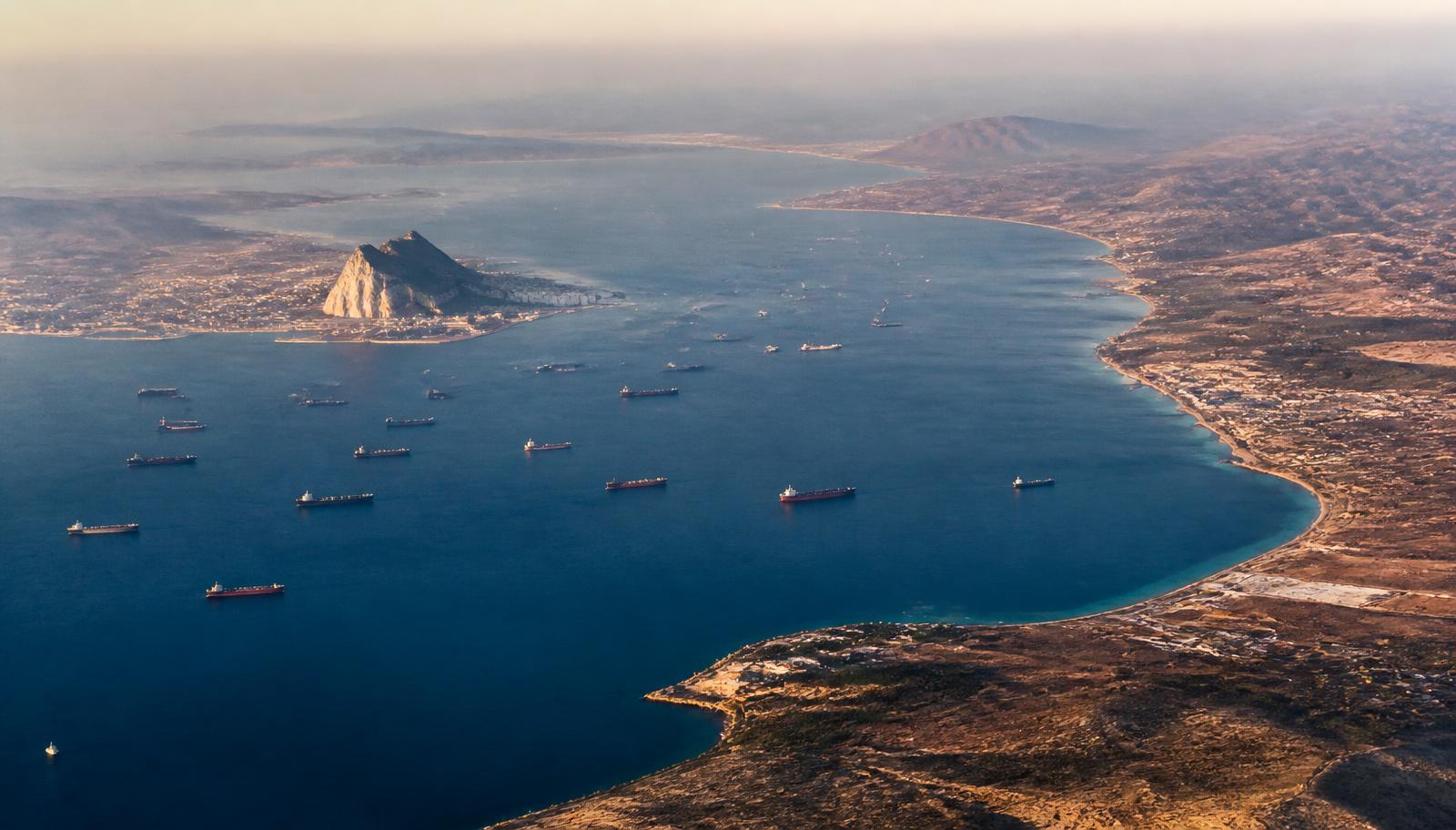
Ceuta and Melilla are not understood as a local migratory problem. They are two positions on the southern shore of the passage that connects the Atlantic with the Mediterranean: a channel barely 14 kilometers at its narrowest point through which a very high fraction of European maritime trade and practically all naval traffic entering and leaving the Mediterranean passes. A choke point in the Strait is not a regional incident: it is a disruption with effects on the energy and logistical supply of Western Europe. Therefore, every time the fence is discussed, who controls the key is also being discussed.
Four operational sovereignties coexist in this channel—Spain, Morocco, the United Kingdom in Gibraltar, and, by virtue of agreements, the United States in Rota and Morón—and a growing economic presence of China on both shores. None of the four can act without considering the others, and none has an absolute veto. This is the real framework in which the southern border is managed.
6bis.1 The assets that make the passage a matter of alliance
| Asset | Nature | Strategic function |
|---|---|---|
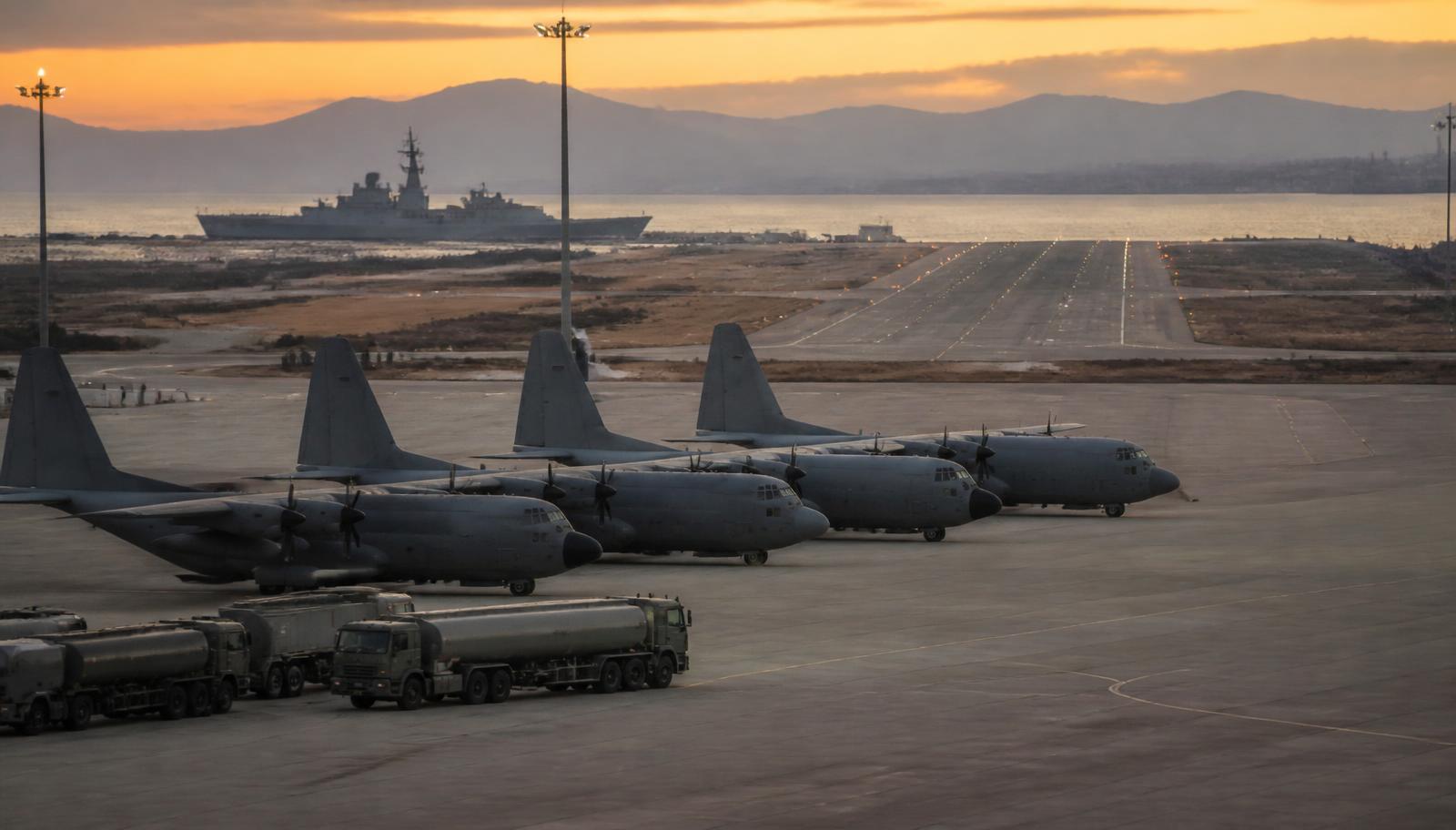
| Rota (Cadiz) | Jointly used naval base | Advanced stationing port for American destroyers with Aegis capability integrated into NATO missile defense. Its value is not local: it covers the Mediterranean, the Eastern Atlantic, and the entire southern flank. |
| Morón de la Frontera (Seville) | Joint-use air base | Rapid deployment platform and airlift bridge to Africa and the Middle East. Reduces reaction times, which would be measured in days from US territory, to hours. |
| Gibraltar | British Overseas Territory | British military port and airfield on the northern shore of the Strait, plus its post-Brexit regime. Adds a third sovereign to a channel 14 kilometers wide at its narrowest point. |
| Ceuta and Melilla | Spanish enclaves on the southern shore | Monitoring of the Strait from the African side, control of Strait traffic, and permanent presence. Their strategic value explains why the dispute is not closed: whoever disputes sovereignty disputes control of the channel. |
| Algeciras and Tangier Med | Two of the largest container ports in the region | Global-scale logistics hubs on different shores. The ownership and operation of their terminals are, in addition to a commercial matter, a supply chain security matter. |
6bis.2 China on both shores: investment, logistics, and dual-use
Chinese entry into the Strait environment has not occurred militarily, but industrially and logistically, which is how lasting dependencies are built. On the southern shore, Morocco has become a manufacturing platform associated with the electric vehicle and battery supply chain with Chinese capital, with industrial zones connected to the Port of Tanger Med and preferential access to the European market. On the northern shore, the operation of container terminals and logistical infrastructure by groups with parent companies in Hong Kong or mainland China has been part of the port map of Southern Europe for years.
The relevant risk is not trade: it is dual-use. Port traffic data, terminal management systems, submarine communication cables crossing the passage, telecommunication networks, and video surveillance equipment collectively constitute a permanent observation capability over the naval and commercial movement of the channel. Whoever operates the infrastructure knows the flow; whoever knows the flow can anticipate it and, in a crisis scenario, condition it.
Hipótesis: China's position in the Strait environment today is one of economic influence and access to logistical information, not military projection. Its main effect on this dossier is indirect: it strengthens Morocco's negotiating capacity—which can diversify partners—and reduces the European margin of pressure, including that linked to border management. This reading is analytical and does not attribute an intelligence function to any specific operator.
6bis.3 The Spanish limit to allied use: friction over Iran
The Defense Cooperation Agreement between Spain and the United States does not cede sovereignty: each use of Rota or Morón for operations exceeding authorized activities requires prior Spanish authorization, case by case. This mechanism, barely visible in calm times, was activated when military escalation in the Middle East placed Iran at the center of the agenda: the Spanish Government maintained that the joint-use bases would not be employed for offensive operations outside the allied framework, a decision that generated explicit friction with the U.S. Administration and added to the parallel contention over the level of defense spending required within NATO.
The consequence for the southern border is direct and often overlooked. A tense relationship with Washington weakens Spain's external support in a territorial dispute where Ceuta and Melilla are not indisputably covered by the collective defense clause of the North Atlantic Treaty—whose geographical scope unequivocally includes peninsular and island territory, but does not resolve with the same clarity the enclaves in North Africa—and where the partner on the other side maintains an intense and expanding defense relationship with the United States. Spain thus negotiates with less coverage than its formal position suggests.
Pregunta de transparencia: Is there an updated official analysis on the effect of frictions in the bilateral relationship with the United States and in the burden-sharing within NATO on Spain's position in the dispute over Ceuta, Melilla, and the waters of the Strait? Has the exposure of critical infrastructure of the passage—terminals, submarine cables, and networks—to operators with non-EU parent companies been evaluated?
Evidencia cualitativa: The Strait concentrates three conditions that rarely coincide: it is a bottleneck of global trade, it is a land border between the European Union and Africa, and it is an area of overlapping interests of four powers. Any policy that treats the fence as a public order problem underestimates all three.
Editorial review
Separating the migratory dossier from the strategic dossier is the fundamental error. The fence is the visible part of a mechanism whose real objective is the control of the passage: while Spain administers fences, others administer terminals, cables, bases, and alliances. The question is not how many meters of perimeter are reinforced, but what external support Spain counts on the day the pressure on the channel ceases to be migratory.
Chapter 06 bis conclusion
The value of Ceuta and Melilla is not measured in kilometers of fence, but in their position over the key to the Strait. That is why the dispute remains open and why migratory pressure functions as an instrument: it does not seek to occupy territory, it seeks to remind who can open and close the passage.
Continued on el capítulo 07
07 · Geopolitical board
The fence on the geopolitical board
The Ceuta and Melilla fence is the only direct terrestrial point of contact between the European Union (EU) and Africa, and its effective control does not lie in Madrid: it lies in Rabat. This outsourcing transforms a Spanish border mechanism into a Moroccan strategic asset, inserted into a board that far exceeds the bilateral relationship. The Alawi kingdom —dynasty on the throne since 1666, with Sharifian legitimacy that Mohammed VI also exercises as Amir al-Muminin (Commander of the Faithful, a religious authority confined to Morocco, independent of Saudi Wahhabism)— has replaced the myth of the "Greater Morocco" of Istiqlal with an agenda of realistic priorities: the Western Sahara as an existential issue, gradual hybrid pressure on Ceuta, Melilla, the islets, and the Canary facade (including the claim of the Atlantic platform around Mount Tropic), and the conversion of the country into a geo-economic hub between Europe and sub-Saharan Africa (analysis in this report, consistent with the official Moroccan doctrine of the 2007 Autonomy Plan as the "only solution"). The lesson Rabat drew from the 2002 Perejil islet crisis —resolved by Spain with Operation Romeo-Sierra— was that direct military action against a NATO partner has an unacceptable cost; since then, the instrument has been hybrid coercion: instrumental migration, customs asphyxiation, measured diplomatic pressure, and espionage. The fence is the physical scenario where this doctrine becomes visible.
7.1 Morocco: subcontracted gendarme and shareholder of the stopcock
7.1.1 "Exemplary" cooperation and €500 M from the EU (2021-2027); but deliberate relaxations in 2021 and 2026 as an instrument of pressure
The Moroccan position on the border is structurally dual. On the one hand, Rabat acts as a subcontracted gendarme for Europe's southern flank: the Ministry of Interior describes the cooperation as "exemplary" and credits Moroccan forces with having "prevented thousands of attempts" at entry (Interior Ministry statements, July 2026). The EU funds this service with a package of 500 million euros for the 2021-2027 period, part of which is allocated to border control, supplemented by bilateral Spanish aid and material transfers (El Periódico, May 2025). On the other hand, Morocco retains effective ownership of the stopcock: the migratory tap opens or closes depending on the state of the diplomatic relationship, not on operational criteria.
The pattern is documented twice. In May 2021, the deliberate relaxation of Moroccan surveillance allowed between 8,000 and 12,000 people —depending on sources— to swim into Ceuta in less than 48 hours, in retaliation for the hospitalization in Logroño of Polisario Front leader Brahim Ghali; Spanish counter-intelligence confirmed DGED agents (DGED, the Moroccan external intelligence service) camouflaged in the crowd (see Chapter 6). The European Parliament condemned the episode as the use of migration "and particularly unaccompanied minors" as an instrument of political pressure (EP resolution, 10/06/2021), and the EU Agency for Fundamental Rights (FRA) categorized it as a case of instrumentalization. In July 2026, the pattern was repeated: after the Supreme Court ruling that excluded the sea from the border rejection regime (STS 814/2026, communicated on 8/07/2026), Moroccan forces showed initial passivity that facilitated the massive entry of between 40,000 (acknowledged by Morocco) and 72,000 people (figure from Minister Grande-Marlaska as of August 4-5; range in counting, EFE, August 2026), while Rabat used water cannons and tear gas only on the Fnideq side, late and cosmetically. Both governments attributed the crisis to "trafficking networks" that instrumentalized the ruling, a formula that allows Madrid not to name the partner on whom it depends.
The analytical reading is that "exemplary" cooperation and deliberate relaxation are not contradictory states but two positions of the same mechanism: Morocco charges for closing and pressures by opening. Spain pays twice —with European funds and diplomatic concessions, starting with the shift on the Sahara in Sánchez's letter to Mohammed VI on 14/03/2022— without acquiring control, which remains outsourced. The operational consequence is as described in previous chapters: with the fence armored and major jumps reduced to residual since 2022, the flow has shifted to swimming, where the lethal toll is growing (about 46 deaths in 2025; 99 swimmers dead in 2026 until August 1, according to EFE) and where the decision to open or close the passage remains Moroccan.
7.1.2 Active sovereignist pressure and customs asphyxiation: customs 2025 (49 imports), 18-hour queues at Tarajal, fishing boats in Ceuta waters
Parallel to the migratory instrument, Rabat maintains low-intensity sovereignist pressure with plausible deniability on the two cities. The Moroccan Senate claimed the "recovery" of Ceuta and Melilla in 2023; symbolic demonstrations have been recorded at the border (July 2025, weak source, to be treated with caution); and between 2024 and 2025, recurrent incursions of Moroccan fishing boats into Ceuta waters were documented (local Ceuta media, 2024-2025). None of this reaches the threshold of a formal bilateral incident, but it all contributes to normalizing the territorial dispute.
The economic arm of that pressure is customs asphyxiation. Following the roadmap of April 2022, the commercial customs of Melilla reopened and that of Ceuta opened for the first time in its history on 11/02/2025, presented by both governments as a normalization milestone. The actual balance of the first year belies the narrative: in Ceuta, only 49 imports and 2 exports were recorded in all of 2025, with temporary closure between July and September for Operation Crossing the Strait; and since late 2025, the Tarajal crossing has suffered collapses with queues of up to 18 hours, attributed to unilateral Moroccan decisions (local media, January 2026). Business associations in both cities accuse Morocco of "asphyxiating" their economies and Madrid of "looking the other way." The XIII High-Level Spanish-Moroccan Meeting (Madrid, 3-4/12/2025), brief and without a press conference, merely "welcomed the good functioning of customs cooperation" without setting normalization dates: the discrepancy between the communiqué and the data of 49 imports illustrates the margin of diplomatic fiction that Spain accepts to avoid straining the gendarme.
The strategic function of this pincer movement —migratory and customs— is to make the economic well-being of Ceuta and Melilla a variable dependent on Rabat's will, reinforcing the message that the viability of both cities requires accommodating Morocco. It is the daily, low-cost, high-efficacy materialization of the post-Perejil doctrine: not to conquer, but to make the adversary's normality unsustainable.
7.2 The brakes on pressure: mafias, World Cup 2030 and country image
7.2.1 Mafias are not interested in an open border (their business is clandestinity); Rabat is not interested in chaos ahead of the 2030 World Cup
If the stopcock is in Moroccan hands, one might ask why Rabat does not open it permanently. The answer is that there are two structural brakes, both economic, that regulate the pressure.
The first is counter-intuitive: human trafficking networks are not interested in an open border. Their business model relies on clandestinity and risk: they charge precisely for overcoming a barrier. A widespread opening would destroy the market, just as border opening prevents fence-jumping for Trans-Saharan flows (Senegal, Niger, Mali, Guinea) which, once inside, benefit from jurisprudential barriers that prevent immediate return (analysis in this report). Mafias are, therefore, objective allies of closure: a permeable but not abolished system suits them, maintaining the price of the service. This also explains the convergence between the official attribution of the 2026 crisis to «trafficking networks» —convenient for both governments— and the real interest of these networks in a hard border environment: the Supreme Court's ruling and its viral dissemination generated demand that the networks monetized.
The second brake is the country's image. Morocco is co-organizing the 2030 FIFA World Cup with Spain and Portugal, the biggest reputational showcase in its recent history before FIFA, investors, and sponsors. Chronic border out of control with images of thousands of people swimming into European territory —those that the President of the European Commission described as «unacceptable» (Von der Leyen, August 2026)— is incompatible with that showcase. Migratory pressure thus has a self-imposed ceiling: it is dosed to obtain concessions without harming the country brand. The July 2026 crisis, with its rapid closure through the Marlaska-Laftit agreement of July 30 to return «as soon as possible» all those who entered, precisely illustrates this dosing logic: sufficient to demonstrate capacity for harm, limited so as not to compromise the calendar towards 2030.
The set of actors can be summarized as follows:
| Actor | Interest in the border | Main instrument | Limit or brake |
|---|---|---|---|
| Morocco (Majzen) | Sovereignty leverage; outsourcing revenues | Migratory tap; customs; DGED | Country-image / 2030 World Cup; dependence on EU funds |
| Spain | Integrity of the system and Schengen without diplomatic crisis | Fence, technology, police cooperation | Dependence on the Moroccan gendarme; own jurisprudence |
| Trafficking Mafias | Maintaining the price of clandestinity | Trans-Saharan networks; swimming; false documentation | An open border would destroy their business |
| EU / Commission / European Border and Coast Guard Agency (Frontex) | Stable southern flank; implementation of the European Pact on Migration and Asylum (PEMA) | €500 M 2021-2027; Frontex deployment offer (2026) | Spain had never accepted Frontex in cities |
| U.S. | Morocco as an irreplaceable strategic ally (AFRICOM) | Recognition of the Sahara; African Lion; Tan-Tan | None visible: the Trump factor backs Rabat |
| Israel | Normalization and corridor to sub-Saharan Africa | Technology (Pegasus); use of the "Trump Highway" | Dependence on the axis with Washington |
| Algeria / Polisario | Counter the Spanish shift on the Sahara | Gas; closure of the Maghreb-Europe gas pipeline (2021) | Relative isolation; market captured by France |
| Russia | Indirect destabilization of EU/NATO | Triangulated financial channels (Venezuela/Cuba) | Limited capacity in the Maghreb theatre |
| France | Energy hegemony in the southwestern Mediterranean | Commercial substitution of Algerian gas | Rivalry with Rabat over influence in the Sahel |
| China | Position in technological war with US | Spanish economic rapprochement (batteries, EV) | Washington/NATO unease regarding Spain |
The table shows a central asymmetry: all actors with direct capacity over the fence —Morocco, the mafias— have an interest in the system of dosed pressure continuing, while actors with an interest in stable control —Spain, the EU— do not possess the material instrument of closure. The brakes on pressure are, moreover, circumstantial: the 2030 World Cup has a date and the mafias' business adapts (it already did so by shifting the flow to swimming and the Algerian route to the Balearic Islands, +24.5% in 2025 according to the Ministry of Interior). None guarantee stability beyond 2030; on the contrary, the World Cup infrastructure itself will multiply cross-border flows and, with them, the exposure surface of Ceuta and Melilla to any calculated incident.
7.3 International actors
7.3.1 US-Morocco-Israel Axis: Sahara recognition, Tan-Tan/African Lion, "Trump Highway," Pegasus; Trump factor as support for Rabat against Spain
The most relevant structural change on the board since 2020 is the consolidation of the Washington-Rabat-Tel Aviv triangle. Its foundational piece was the unilateral recognition by the United States of Moroccan sovereignty over Western Sahara (December 2020, Trump administration), a counterpart to the normalization of relations between Morocco and Israel within the framework of the Abraham Accords. The revalidation of this policy under a second Trump mandate makes Morocco, in Washington's eyes, a priority ally in the Maghreb —and Spain, by contrast, a partner that the US administration is predisposed to punish, due to its policy towards Israel and its insufficient defense spending (analysis in this report).
The military component of the axis has a physical anchorage a stone's throw from the Canary Islands: the Tan-Tan polygon and the Cap Draa firing range, in southern Morocco, have become a nerve center for the United States Africa Command (AFRICOM) and a recurring venue for African Lion, the largest annual US military exercise on the continent. A real-time firing range a short distance from the Canary archipelago transforms Morocco, in this report's assessment, from a strong ally into an irreplaceable strategic ally. On the ground, US recognition has materialized in the so-called "President Donald J. Trump Highway": the Tiznit-Dakhla corridor, 1,055 kilometers through Western Sahara, the only practicable land axis between North Africa and sub-Saharan Africa, named in gratitude to Washington and also used by Israel as a projection route into the continent (analysis in this report).
The Israeli component provides the technological dimension: after the Abraham Accords, Morocco acquired the Pegasus intrusion system from NSO Group, which compromised the phones of the Spanish Prime Minister, Minister of Defense, and Minister of Interior in 2021-2022 (chapter 6 details the technical and counterintelligence analysis). In geopolitical terms, the consequence is an asymmetric advantage for Rabat in any negotiation over the Strait and the autonomous cities: the subcontracted gendarme knows the client's conversations. The sum of these factors —recognition, AFRICOM, logistical corridor, cyber espionage— explains why the 2021 crisis ended with the Spanish shift on the Sahara and not the other way around: Spain negotiates its southern border without a decisive ally in Washington, facing a Morocco that does have one.
7.3.2 Russia (Venezuela/Cuba channels), Algeria and gas, France, China and European disunity
Russia has no direct presence in the fence theater, but it is interested in its destabilization as part of its general strategy of eroding the EU and NATO, with financial and influence channels triangulated through Venezuela and Cuba (analysis in this report). Every crisis in Ceuta feeds the European narrative of porous borders that benefits Moscow: the instrumentalization of migration as a hybrid weapon is, since Belarus 2021, a technique that the Kremlin recognizes as its own and whose Moroccan replica is functional to it.
Algeria is the regional loser of the realignment. The Spanish shift on the Sahara in March 2022, added to US recognition, left Algiers —historic patron of the Polisario Front— in a defensive position. Its economic response had already occurred earlier: the closure of the Maghreb-Europe gas pipeline (October 2021, due to the unrenewed expiration of the contract after the Algerian-Moroccan rupture) deprived Morocco of gas transit to Spain and reordered the energy map of the southwestern Mediterranean. Spain compensated with liquefied natural gas, but France took advantage of the commercial vacuum, consolidating its position of energy hegemony in the region as a supplier and regasification hub (analysis in this report). Paris also maintains its secular rivalry with Rabat for influence in the Sahel, which makes France an ambivalent actor: a structural ally of Spain in the EU, but a competitor and beneficiary of Hispano-Moroccan frictions.
China completes the picture from the Spanish flank. Madrid's economic rapprochement with Beijing —batteries, electric vehicles, green technology— generates unease in Washington and NATO amidst the technological war between the two powers (analysis in this report). The effect on the fence is indirect but real: every element of friction between Spain and the US administration reduces Spanish political capital in Washington, precisely the capital that would be needed to counterbalance US support for Morocco in a border crisis. European disunity aggravates the problem: internal migratory solidarity within the EU has weakened, and the management of the southern flank has become bilateral, leaving Spain to negotiate alone with Rabat on issues —the migratory tap, customs, surveillance of the Strait— that affect the entire Schengen area.
7.3.3 EU and Schengen: Meloni axis and European right-wing parties, suspension of Schengen with Spain and Marlaska management; 2021 EP resolution on instrumentalization
The European dimension of the fence has three facets. The first is the legal framework, already discussed in chapter 5: the European Parliament's resolution of 10/06/2021 (see section 7.1.1) condemned the instrumentalization of migration by Morocco, and Regulation (EU) 2024/1359 on crisis situations expressly incorporated instrumentalization as a ground that allows for the modulation of procedural guarantees, while the revised Schengen Borders Code of 2024 enables the temporary closure of crossings. That is: the EU has provided Spain with a legal language to name what Morocco does to it, but this language protects the border apparatus, it does not improve Madrid's negotiating position.
The second aspect is European internal politics. The rise of the right —with Giorgia Meloni's Italy as a benchmark, along with Central European governments— has weakened migratory solidarity and sharpened the perception of the Spanish southern border as a hole in Schengen. The extreme materialization of that perception came in the 2026 crisis: Italy's suspension of Schengen with Spain, which Minister Grande-Marlaska requested to revoke in the midst of crisis management (EFE, August 2026). For a Member State to re-establish controls against another due to pressure in Ceuta is the clearest indicator that the fence is no longer a Spanish problem delegable to Rabat, but a factor of systemic risk for European free movement. The Commission's response was ambivalent: «firm solidarity» from the Interior Ministers (August 4, 2026) and an offer from Commissioner Magnus Brunner to deploy Frontex in Ceuta —an unprecedented offer, as operations Hera and Indalo never covered the cities and Spain rejected the deployment even in May 2021—, but with simultaneous endorsement of the «rapid return of those who have entered illegally», meaning validating the mass returns agreed with Morocco.
The third aspect is the strategic lesson: Marlaska's management of the 2021 and 2026 crises —prioritizing the relationship with Rabat, rejecting Frontex, accepting the fiction of «trafficking networks» as the sole cause— has preserved bilateral stability at the cost of consolidating externalization. Each episode reinforces the precedent: Moroccan migratory pressure yields results (the Saharan shift of 2022; the implicit softening of the Spanish position in 2026), and the EU funds the pressurer while demanding the pressed maintain a closed border. The 2021 EP resolution, which Morocco called «unacceptable», also demonstrated the limits of European condemnation: it did not alter a single euro of the 500 million package nor a single comma of the «exemplary» cooperation.
7.4 Narrative Warfare: The Case of the «Buoys»
7.4.1 Spill barriers sold as border barriers (technique: centimeters of profile, 1m skirt); the announcement of buoys in Melilla 2026 as a repetition of the disinformation pattern
The last component of the chessboard is neither diplomatic nor military, but communicative. 21st-century borders are also contested in the information space, and the Ceuta and Melilla border has been the scene of a disinformation technique with a repeated pattern: the presentation of floating oil spill containment booms —those used by Maritime Rescue to contain spills— as «anti-immigration barriers» or «maritime border barriers».
The technique is verifiable in its physical parameters. An oil spill containment boom has an emergent profile of just a few centimeters and a submerged skirt of about one meter: it is designed to retain a floating film of hydrocarbon, not a human being. It is incapable of stopping a swimmer —who bypasses it by submerging— or a vessel —which passes over it due to its own draft—. Its function as border shielding is null; its communicative function, however, is high: the image of a line of floats in the sea conveys to the public the sensation of a sealed perimeter, «simulating a fictitious border shield» (analysis in this report). The confusion —in some cases, deliberate by institutional actors; in others, due to journalistic imprecision— turns an environmental protection instrument into security propaganda.
The announcement of «buoys to make the perimeter watertight» in Melilla, made during the height of the crisis in July 2026, reproduces the pattern with precision (local media and EFE, July-August 2026). At the moment of maximum reputational pressure —with the Temporary Immigrant Stay Centre (CETI) saturated, 260 migrants awaiting, 140 of them minors—, the communicated measure was not an effective control device but a visual signifier of reaction. The analytical risk is twofold. Internal: the repetition of the trick erodes the credibility of the authorities with the local population, who have already led protests against the «invasion» and perceive the gap between the narrative and reality —the same gap that fuels the opposition and European actors who call for closing Schengen to Spain. External: disinformation about the border device offers Morocco and third parties a vector for ridiculing Spanish control, useful in the narrative war that accompanies each crisis.
Chapter 7 Conclusion
The synthesis of the chapter is a reading of asymmetrical power balance. Morocco holds four advantages over the fence that Spain does not possess: material ownership of the tap, the backing of the decisive ally in Washington (with the Trump factor as an aggravating circumstance), the informational advantage of technological espionage, and narrative initiative. Spain retains three counterweights —the European legal framework for instrumentalization, Moroccan dependence on EU funds, and the reputational brake of the 2030 World Cup—, but all are defensive, circumstantial, or of known expiry. The brakes are not guarantees: the World Cup has an end date, the mafias' business adapts to every shield, and US support for Rabat has become structural. In this unstable equilibrium, the fence functions less as a border than as a sensor of the state of the bilateral relationship: its permeability at any given moment is the price Morocco decides to charge, and its technological shielding does not alter the decisive variable, which is political. The translation of this equilibrium into risks and operational scenarios corresponds to the next chapter.
Continued on capítulo 8
Editorial review
The actor matrix is useful as a synthesis but simplifies relationships of very different intensity under the same table: the weight of the US-Morocco-Israel axis is not comparable, in terms of immediate damage capacity, to that of Russia or China in this specific theater, even if the report places them in the same analytical category.
IV3 · Auditable visual
Who decides and who responds
Message: La frontera se gobierna en cuatro niveles simultáneos; el ciclo de crisis se repite porque la palanca está en un nivel y el coste en otro.
Step 1
Leverage
Moroccan political decision to modulate control.
Step 2
Pressure
Concentration and assault or coordinated maritime departure.
Step 3
Response
Spanish containment and rejection apparatus.
Step 4
Consequence
Human cost, legal litigation, and diplomatic crisis.
Step 5
Negotiation
Concessions, funds, and restoration of control.
European and Atlantic level
- European Commission
- Paying agent for migration management funds and holder of reimbursement clauses.
- NATO / United States
- Joint use bases of Rota and Morón; incomplete coverage of positions in the Treaty.
Spanish state level
- Ministry of Interior
- Surveillance apparatus, Civil Guard, border rejections, and perimeter construction.
- Foreign Affairs and CNI
- Bilateral relations, foreign intelligence, and crisis management.
- Courts
- Legality control: STC 172/2020, ECHR and STS 814/2026.
Moroccan level
- Ministry of Interior / DGED
- Control of the external side, Auxiliary Forces, and intelligence.
- Political decision
- Modulation of migratory pressure as a negotiation instrument.
Local and humanitarian level
- Autonomous cities
- Reception, unaccompanied minors and saturated services.
- NGOs and human rights organizations
- Documentation of violations and healthcare assistance.
He who pulls the lever does not pay the human cost or the legal cost.
What it demonstrates — and what it does not
What it demonstrates
That border competences are distributed among levels with different incentives, and that the observed crisis cycle allows for a stable sequential reading.
What it does not demonstrate
It is not an official organizational chart nor does it attribute specific intentions to individuals or institutions: it describes functions and a hypothesis of sequence, not a chain of command.
- Source
- Ley 17/2015; Acuerdo de Asociación UE-Marruecos; documentación citada en los capítulos 05 a 08 de este informe.
- Editorial date
- Edición web v1.3 · 6 de agosto de 2026
- Level of evidence
- C
Alternative text: Esquema de cuatro niveles de actores —europeo y atlántico, estatal español, marroquí y local-humanitario— y ciclo de cinco pasos: palanca política, presión migratoria, respuesta del dispositivo, consecuencia humana y jurídica, y negociación.
07 bis · The sports vector
2030 World Cup and Africa Cup: football as leverage and as a brake on the southern border
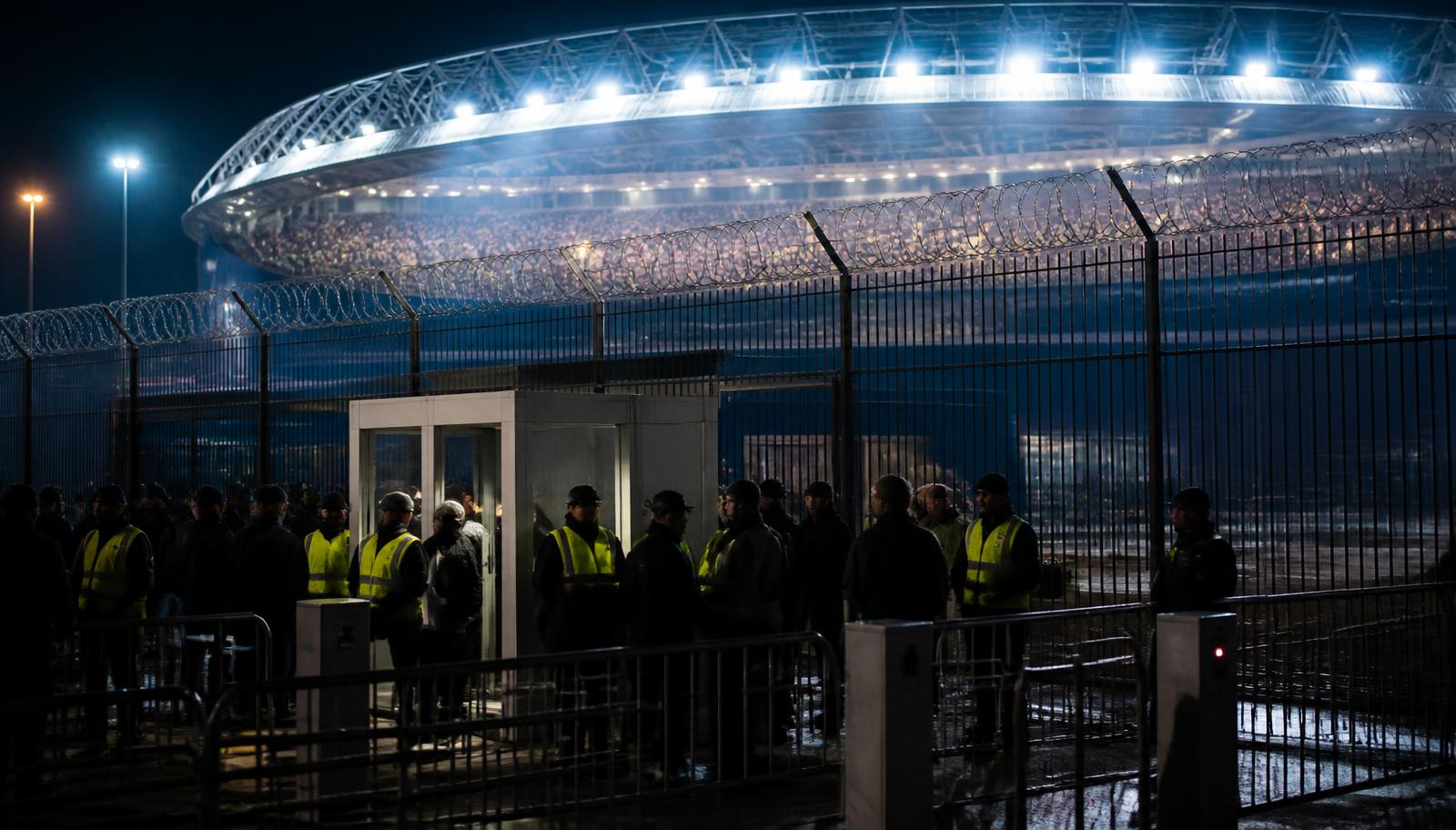
Sport is not an embellishment in this dossier: it is one of the variables that explains why pressure on Ceuta and Melilla is dosed instead of overflowing. Spain, Portugal, and Morocco are jointly organizing the 2030 World Cup —with commemorative matches planned in Uruguay, Argentina, and Paraguay—, and Morocco has also consolidated its role as a continental reference venue after hosting the Africa Cup of Nations. This dual condition produces two opposing effects that must be read together: it gives Rabat a lever of international prestige that amplifies its negotiating capacity, and at the same time imposes a brake on it, because televised border chaos harms the asset it is building.
7bis.1 The 2030 World Cup as a coupled dossier
The shared bid links Spain and Morocco in a long-term interdependent relationship: infrastructure, mobility across the Strait, event security, police and intelligence cooperation, and a joint image that neither party can unilaterally deteriorate without cost. In practice, this turns the tournament into a dossier coupled with that of the border: Spanish verbal containment during the July-August 2026 crisis —a crisis officially attributed to 'trafficking networks' and not to the partner on whom border control depends— is consistent with a calculation that includes the World Cup among the assets to be protected.
| Vector | Area | Effect on the border |
|---|---|---|
| Co-host and partner | World Cup 2030 (Spain, Portugal, Morocco) | The joint bid turns Morocco into an institutional partner of Spain throughout the decade. Each border crisis is also read as a reputational risk for the tournament, which reinforces Spanish diplomatic containment. |
| Border and mobility | Algeciras-Tangier Corridor and the Strait | The event requires transit agreements, joint security, crowd control, and massive mobility across the Strait. This package is negotiated with the same actor that controls the migratory key: the dossiers become coupled. |
| Territorial symbology | Maps, venues and designations | In a shared tournament, official cartography, venue labeling, and territorial representation acquire political value. Any ambiguity regarding Ceuta, Melilla, or the Western Sahara becomes material for narrative dispute. |
| Event security | Counter-terrorism and shared intelligence | The cooperation required by the tournament necessitates sustained exchange between services which, in parallel, maintain the tension described in chapter 06. The same relationship is simultaneously cooperative and adversarial. |
Hipótesis: The 2030 World Cup acts as a bidirectional buffer: it reduces the probability of a sustained migratory opening by Rabat —the showcase penalizes it— and it also reduces the probability of a high-profile Spanish response to instrumentalization episodes. The result is an equilibrium of intermediate pressure: intense, brief crises without declared diplomatic consequences. This reading is analytical and not supported by official documentation linking both issues.
7bis.2 The African Cup of Nations: a precedent for sporting conflict with political implications
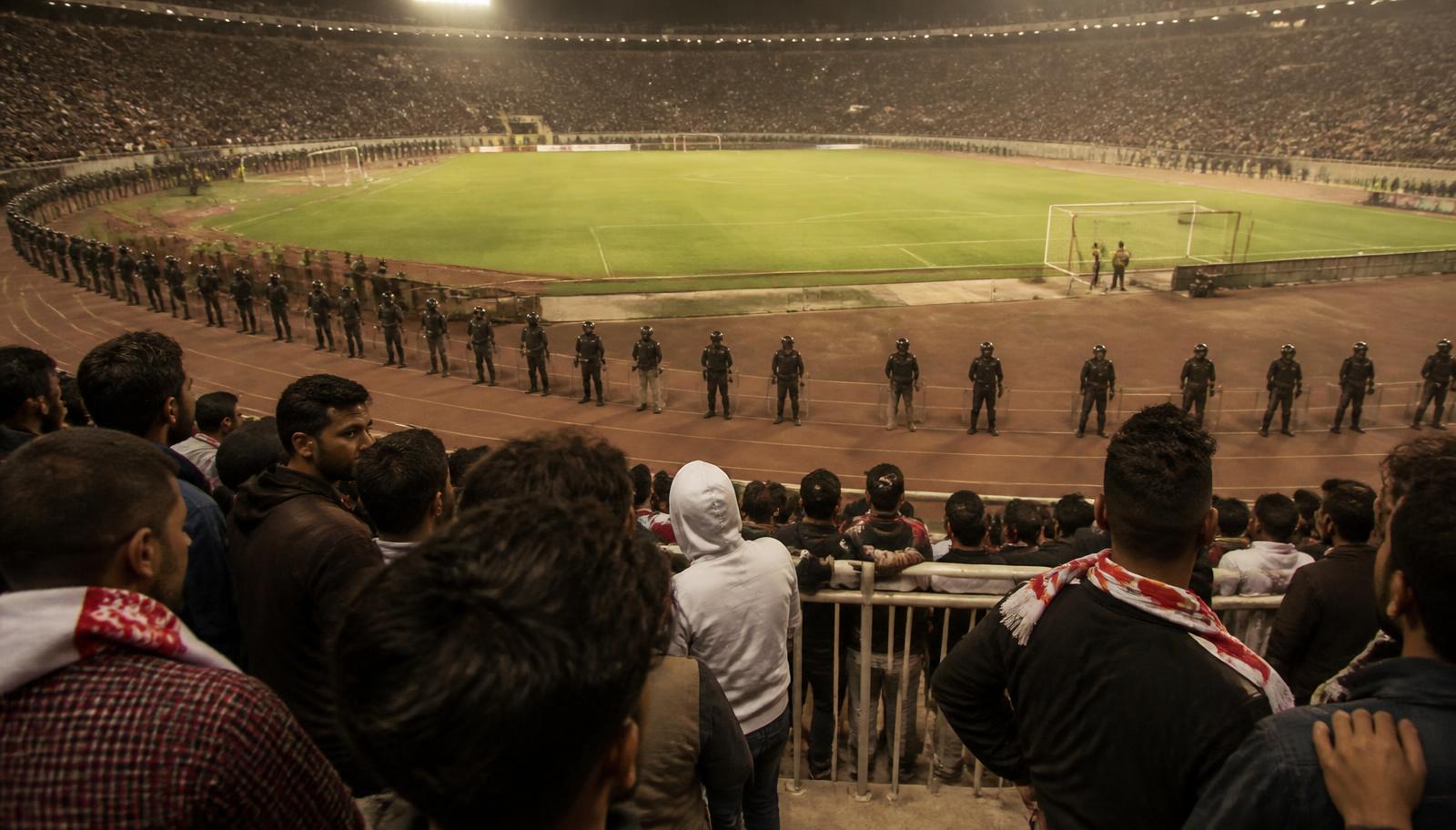
The African Cup of Nations held in Morocco added a backdrop to the same phenomenon. The tournament left a sporting controversy with political undertones —with a final match whose resolution was still pending before federal bodies at the close of this report— which activated the usual mechanisms of this type of dispute: appeals to the continental confederation's bodies, pressure from federations, coordinated campaigns on social networks, and framing of the arbitral or administrative decision as a national grievance. The specific details of the case are ongoing and this report does not state a result or assign responsibility.
What can be analyzed is the pattern. An unresolved sporting dispute acts as an amplifier of identity mobilization throughout the region: it strains the relationship between federations and governments, fuels the narrative war described in chapter 07, and can coincide on the calendar with episodes of border pressure. The temporal correlation between major sporting events and peaks of tension in the Strait merits systematic monitoring, not automatic causal attribution.
Pregunta de transparencia: Does the Spanish security planning for the 2030 World Cup include an explicit analysis of the risk of migratory instrumentalization in Ceuta, Melilla, and the Canary Islands route during the preparatory period and the tournament? And a protocol for episodes of sporting tension with political implications that coincide with the event window?
Evidencia cualitativa: Major shared sporting events are, in recent practice, foreign policy instruments: they provide legitimacy, attract infrastructure investment, and create mutual dependencies that reduce the margin for open confrontation. Applied to this case, football is the only area where Spain and Morocco have formally accepted a decade-long strategic partnership, while the territorial and migratory dispute remains intact.
Editorial review
Treating the 2030 World Cup as an exclusively sporting matter is an analytical error. It is, at the same time, the greatest guarantee of containing border pressure until 2030 and Spain's biggest diplomatic mortgage of the period: the closer the tournament gets, the more costly it will be for Madrid to publicly name the instrumentalization of the border. A border policy based on this equilibrium depends on a calendar that ends; it is advisable to have scenarios for the day after.
End of chapter 07 bis
The sporting vector does not change the nature of the problem —the key to passage remains in Rabat— but it does change its rhythm: during the 2026-2030 window, pressure will be intense and episodic rather than sustained. This window is precisely the timeframe Spain has to build scaled legal pathways and its own control capacity, instead of continuing to buy time.
Continued on el capítulo 08